
It’s 2:00 AM. You’re in a dark room, and your baby feels like a little toasted bun. Your heart starts racing, and the first thing you reach for is the thermometer. But then comes the struggle. If you use a traditional digital one under the arm, your baby screams and kicks. If you try the old-school way, you’re worried about accuracy.
As parents in India, we deal with a lot—changing weather, sudden viral fevers, and the endless advice from elders. Choosing the right tool to monitor your baby’s health shouldn’t be another source of stress.
Today, the big debate is: forehead vs ear thermometer for baby. Which one is actually worth your money? Which one won’t wake up a sleeping infant? Let’s break it down like we’re chatting over a cup of chai.
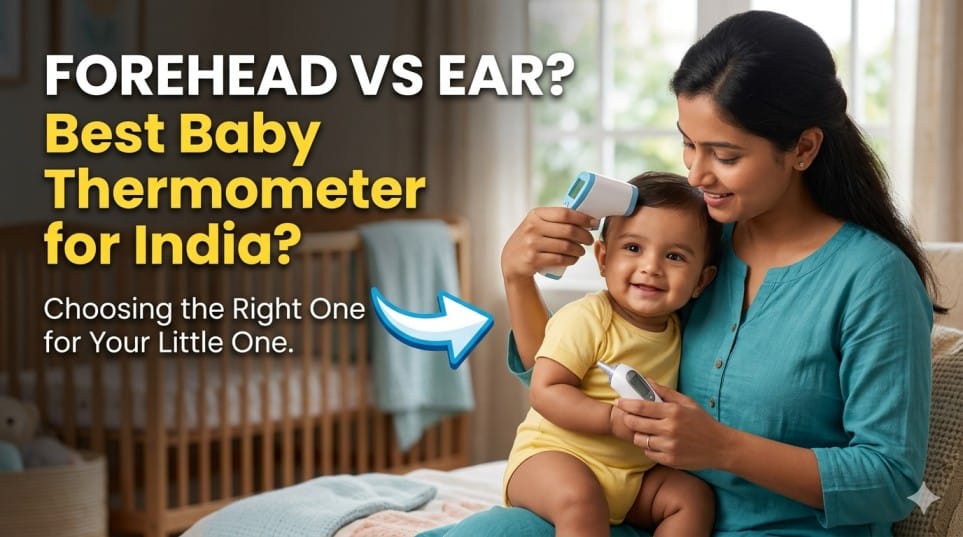
The Fever Dilemma: Why Your Choice Matters
When your little one has a temperature, accuracy is everything. A one-degree difference can be the gap between “let’s monitor him at home” and “we need to call the pediatrician right now.”
In India, we are seeing a shift. Gone are the days when we only relied on mercury thermometers (which are actually quite risky if they break). Most modern Indian parents are now choosing between Infrared (Non-contact) Forehead Thermometers and Tympanic (Ear) Thermometers.
If you are just starting your parenting journey, you might also want to check out our deep dive into the best thermometer for newborn baby in India to see which brands are currently topping the charts.
Forehead vs Ear Thermometer: At a Glance
Before we dive into the details, here is a quick comparison to help you see the “big picture.”
| Feature | Forehead (Non-Contact) | Ear (Tympanic) |
| Ease of Use | Extremely easy; no touching needed. | Requires gentle insertion into the ear canal. |
| Speed | 1–2 seconds. | 1–3 seconds. |
| Accuracy | Good, but can be affected by sweat or room temp. | Very high (reflects core body temperature). |
| Age Suitability | All ages, especially newborns. | Best for babies 6 months and older. |
| Disturbance | Zero. Can be used while the baby sleeps. | Might wake a light sleeper. |
| Maintenance | Low (no probe covers needed). | Requires cleaning or disposable lens filters. |
The Forehead Thermometer: The “Ninja” Parent’s Favorite
The infrared forehead thermometer (often called a non-contact thermometer) became a household name in India during the pandemic. For a parent, it’s like a magic wand. You point, click, and you’re done.
Why it works for Indian parents:
- The Sleep Savior: We all know the struggle of putting a fussy, feverish baby to sleep. The last thing you want to do is poke them. With an infrared vs ear thermometer baby comparison, the forehead version wins on “stealth mode” every time.
- Hygiene: In a joint family setup where multiple people might need the thermometer, non-contact is the safest way to prevent the spread of germs.
- Versatility: Many of these devices can also measure the temperature of your baby’s milk bottle or bathwater.
The Downside:
It’s sensitive. If your baby has been crying (making their head hot) or if they are sitting right under a high-speed ceiling fan, the reading might be slightly off.
Pro-Tip: Always wipe the baby’s forehead of sweat or oil before clicking for the most accurate results.
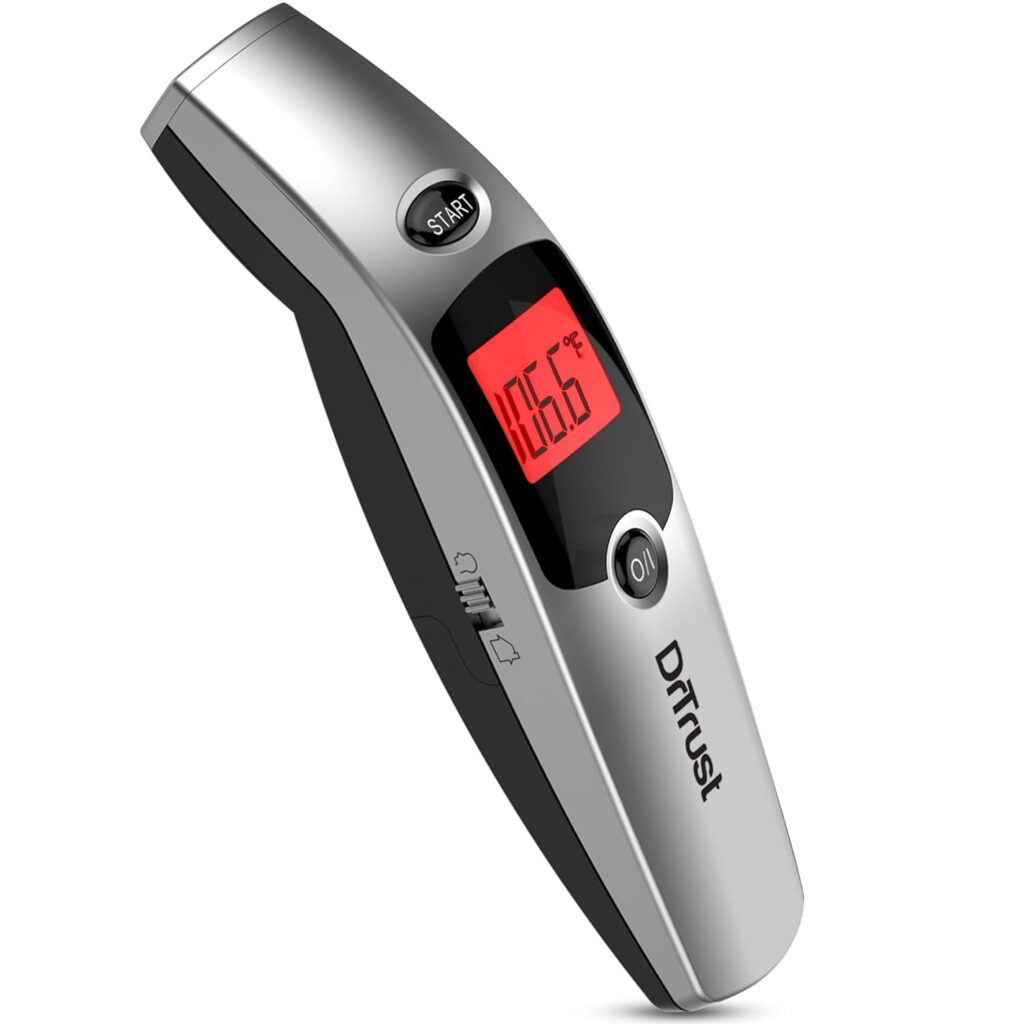
Dr Trust (USA) Forehead Digital Infrared Thermometer for babies
- Type: Infrared, non-contact (forehead)
- Reading Time: ~1 second
- Modes: Body & object temperature
- Display: Backlit LCD with fever color indicator
- Memory: Stores up to 35 readings
The Ear Thermometer: The Doctor’s Pick
Ear thermometers, or tympanic thermometers, work by measuring the infrared heat jump coming from the eardrum. Because the eardrum shares blood supply with the brain’s temperature control center, it’s considered very accurate for “core” temperature.
Why it’s great:
- Precision: If you want a reading that is closest to what a doctor would get, the ear is usually the way to go.
- Speed: It’s almost as fast as the forehead version.
The Catch for Babies:
Here’s the thing—newborns have very narrow ear canals. Most pediatricians, including experts at The Mayo Clinic, suggest waiting until a baby is at least 6 months old before relying on ear thermometers.
Also, if your baby has an ear infection or too much wax, the reading won’t be correct. In the humid Indian climate, ear wax buildup is quite common, so keep that in mind!
Common Mistakes Parents Make When Taking Temperature
Even the best thermometer for newborn India won’t work if the technique is wrong. Here are a few “oops” moments I’ve learned from:
- Taking it too soon after a bath: A warm bath or even a massage with oil can temporarily raise skin temperature. Wait 20 minutes.
- The “Fan” Factor: In India, we love our pedestal fans and ACs. If the cold air is hitting the forehead directly, an infrared thermometer will give a “Low” reading. Move to a neutral corner of the room.
- Not checking the mode: Some thermometers have a “Surface” mode and a “Body” mode. If you accidentally leave it on surface mode, you’ll get a dangerously low reading for a feverish baby.
Which One is Best for Different Stages?
1. For Newborns (0–6 Months)
Go for a forehead thermometer or a high-quality digital thermometer for the armpit. Avoid ear thermometers at this stage because their tiny ear canals make it hard to get a clear line to the eardrum. Since newborns are sensitive, you might also want to ensure their environment is optimal; for instance, using the best air purifier for babies in India can keep the nursery air clean during those recovery days.
2. For Infants (6 Months – 2 Years)
This is the “sweet spot” where both work well. If your baby is a heavy sleeper, stay with the forehead. If they are prone to high fevers and you need medical-grade precision, an ear thermometer is a great investment.
3. For Toddlers and Beyond
Toddlers are basically tiny wrestlers. A forehead thermometer is usually the only way to get a reading without a chase sequence through the house!
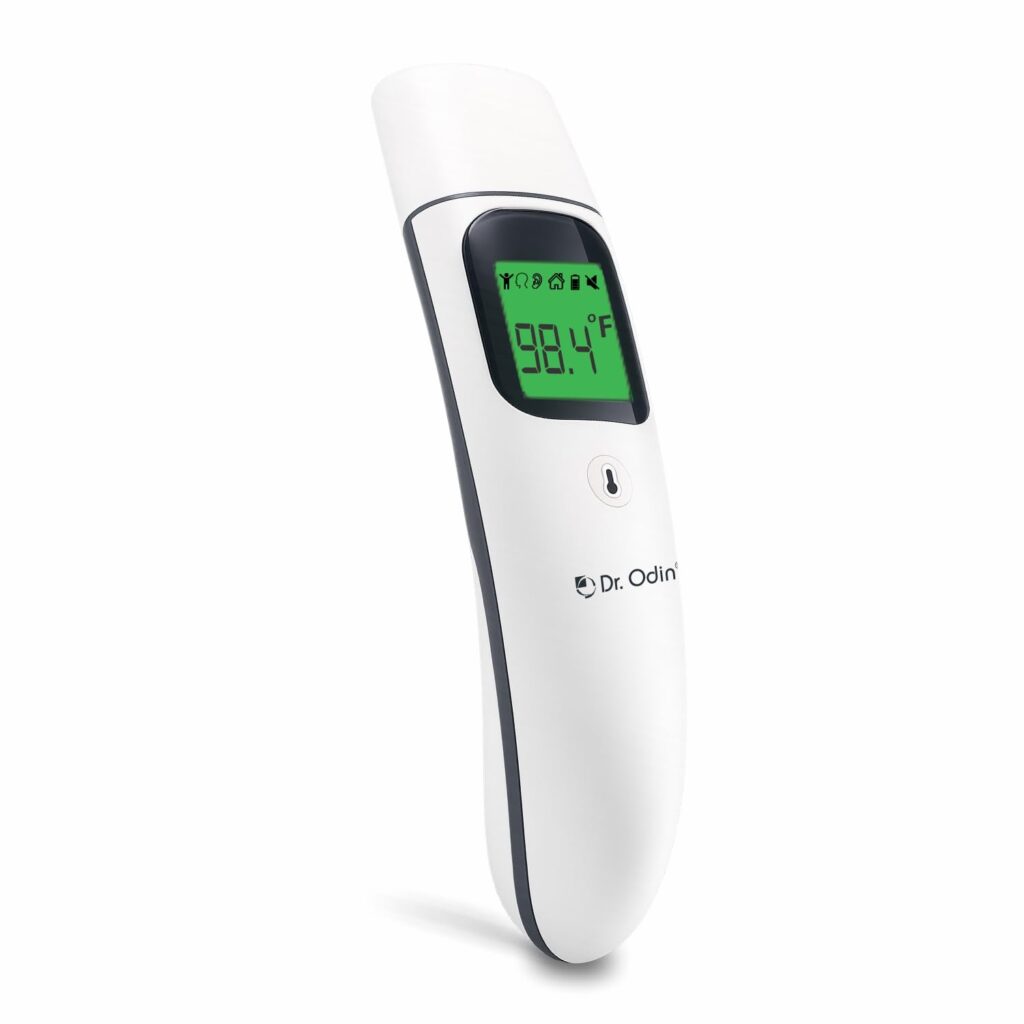
Dr. Odin OIR003 Non-Contact Dual Mode Digital Infrared Thermometer for Forehead & Ear
- Type: Infrared, non-contact (forehead & ear – dual mode)
- Reading Time: Instant (within seconds)
- Technology: Advanced infrared sensing for hygienic use
- Modes: Body + object temperature measurement
- Display: Smart color display for fever indication
Real-Life Usage Tips for Indian Parents
- The “Normal” Baseline: Every baby is different. Take your baby’s temperature when they are healthy and happy. This helps you know what their normal is (it’s not always exactly 98.6°F!).
- Battery Check: Infrared thermometers eat up batteries. Always keep a spare pair of AAA batteries in your diaper bag.
- Check the ambient temp: If you’ve just come in from the hot Indian summer sun, let the baby (and the device) acclimate to the room temperature for 15 minutes before testing. Speaking of summer, don’t forget to protect their skin with the best baby sunscreens in India when you’re heading out for those doctor visits.
FAQs: Your Questions Answered
Is a forehead thermometer as accurate as a rectal one?
Strictly speaking, medical professionals consider rectal readings the “gold standard” for infants. However, for home monitoring, a forehead thermometer is much more practical and less distressing for the baby. If the forehead reading shows a high fever, that’s your cue to call the doctor.
Can I use a forehead thermometer to check milk temperature?
Many infrared models have a “Home” or “Object” mode specifically for this! It’s a great way to ensure the bottle isn’t too hot.
Why does my ear thermometer give different readings in each ear?
It’s normal to have a slight variation. Usually, you should go with the higher of the two readings. Ensure the ear is pulled slightly back and up to straighten the canal for the best results.
Which is the baby fever thermometer which is best for travel?
The forehead thermometer is best for travel because it doesn’t require extra probe covers and is generally more rugged for quick checks in cars or planes.
The Verdict: What Should You Buy?
If I had to choose just one for an Indian household, I’d recommend a high-quality Non-Contact Forehead Thermometer.
Why? Because it’s the most versatile. You can use it from day one, it doesn’t disturb a sleeping baby, and it’s hygienic for the whole family. However, if you are a parent who wants that extra layer of clinical certainty for an older baby, a Dual-Mode Thermometer (one that does both forehead and ear) is the ultimate winner.
When it comes to baby fever thermometer which is best, the “best” one is the one you feel comfortable using correctly in the middle of the night when you’re tired and worried.
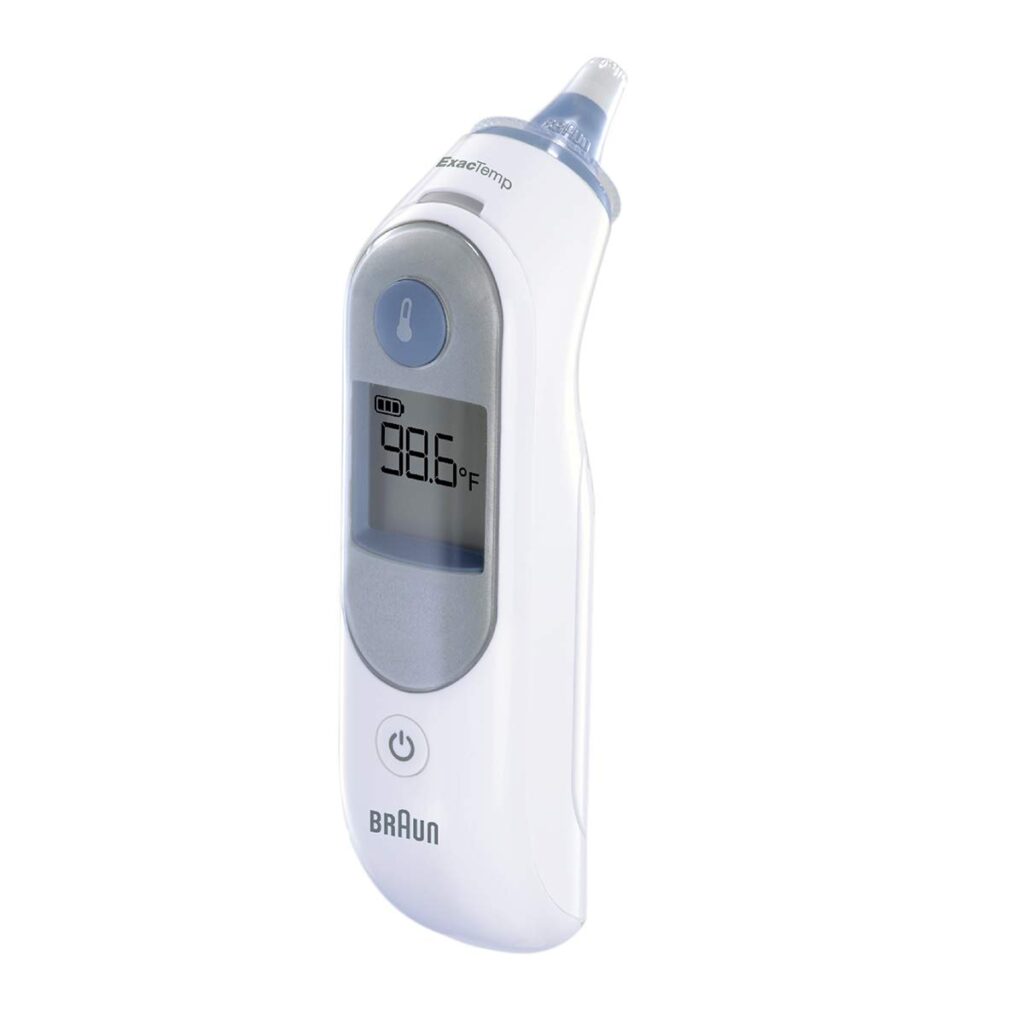
Braun Thermoscan Ear Thermometer
- Type: Infrared ear thermometer (tympanic)
- Reading Time: ~2–3 seconds
- Accuracy Feature: Pre-warmed tip for consistent readings
- Positioning System: ExacTemp guidance (light + beep for correct placement)
- Display: Large digital screen
- Memory: Stores last 8–9 readings
- Hygiene: Disposable lens filters included
Conclusion
At the end of the day, a thermometer is just a tool. Trust your parental intuition. If your baby looks lethargic or isn’t feeding well, even if the thermometer says “99°F,” don’t hesitate to contact your pediatrician.
Whether you choose the “ninja” forehead approach or the “precision” ear method, having a reliable device in your first-aid kit is essential for peace of mind. Stay calm, keep them hydrated, and remember—you’re doing a great job, Mama/Papa!
Want more tips on keeping your little one comfortable? Check out our guide on the best baby lotion for summer in India to keep their skin hydrated during those feverish sweat-outs.
References & Resources:
- World Health Organization (WHO) – Child Health Advice
- Indian Academy of Pediatrics – Fever Guidelines

Hi, I’m Asif Shaikh, a new parent to my son Ashar, born in December 2025. Through NurtureThrive, I share practical parenting tips, honest product recommendations, and real-life experiences to help new parents make confident decisions for their babies.
All content is based on personal experience, thorough research, and a focus on safety and simplicity. My goal is to make parenting a little easier by providing clear, reliable, and genuinely helpful information.
Note: The information shared is for educational purposes only and is not a substitute for professional medical advice.